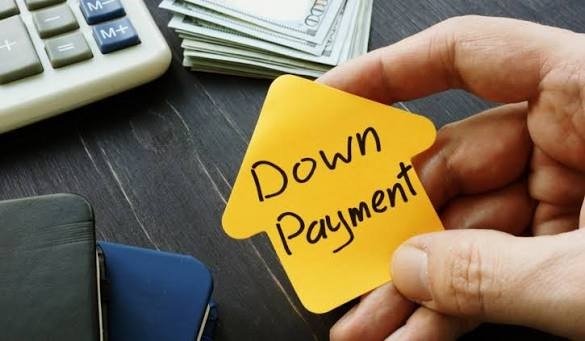
A down payment is the portion of the home’s purchase price that you pay upfront rather than borrowing from the lender.
For example, suppose you purchase a home for $300,000 and make a 10% down payment.
Your calculation would be:
$300,000 × 10% = $30,000
You would pay $30,000 toward the purchase price and potentially finance the remaining $270,000 through a mortgage, before considering other loan-related adjustments or costs.
How Much Down Payment Do You Need?
There is no single down payment requirement for every homebuyer.
The amount you need depends on:
- Mortgage program
- Credit profile
- Income
- Debt-to-income ratio
- Property type
- Loan amount
- Lender requirements
- Whether you qualify for assistance programs
Some common mortgage programs offer the following minimum down-payment possibilities:
| Mortgage Type | Potential Minimum Down Payment |
|---|---|
| FHA | As low as 3.5% for eligible borrowers |
| Conventional | As low as 3% for certain programs |
| VA | 0% for eligible borrowers in qualifying circumstances |
| USDA | 0% for eligible borrowers in qualifying circumstances |
These are general examples, not guarantees. Eligibility requirements and lender guidelines apply.
Do You Need 20% Down to Buy a House?
No.
A 20% down payment is not required for every mortgage.
However, putting 20% down can have advantages, particularly with some conventional mortgages.
A larger down payment can:
- Reduce the amount you borrow
- Lower your monthly principal and interest payment
- Reduce the amount of interest paid over time
- Potentially reduce or eliminate mortgage insurance on certain conventional loans
But waiting until you have 20% may not always be the best choice.
For some buyers, making a smaller down payment and purchasing sooner may make more financial sense, depending on their circumstances.
FHA Down Payment Requirements
FHA loans are popular among borrowers looking for a relatively low down payment.
Eligible borrowers with a qualifying credit profile may be able to purchase a home with a down payment as low as 3.5%.
For example, on a $300,000 home:
$300,000 × 3.5% = $10,500
That means a 3.5% down payment would be $10,500.
FHA loans also generally require mortgage insurance, so buyers should consider both the down payment and the cost of FHA Mortgage Insurance Premium (MIP).
Conventional Loan Down Payment
Some conventional mortgage programs allow qualified borrowers to put down as little as 3%.
For example, on a $300,000 home:
$300,000 × 3% = $9,000
However, the exact down-payment requirement depends on the conventional loan program, borrower qualifications, property, and lender.
If your down payment is less than 20%, you may also have to pay private mortgage insurance (PMI), depending on the loan structure.
VA Loan Down Payment
Eligible veterans, active-duty service members, and certain other qualified borrowers may be able to purchase a home with no down payment through a VA-backed mortgage when they meet applicable requirements.
A 0% down payment means you may be able to finance the entire eligible purchase price.
However, buyers should still budget for closing costs, prepaid expenses, and other costs associated with purchasing a home.
USDA Loan Down Payment
Eligible borrowers purchasing qualifying properties in eligible rural areas may be able to use USDA financing with 100% financing.
This means a down payment may not be required under the applicable program.
USDA loans have specific income, property, and eligibility requirements.
Down Payment vs. Closing Costs
A down payment is not the same thing as closing costs.
Down Payment
Money applied toward the purchase price of the home.
Closing Costs
Expenses associated with completing the mortgage and real estate transaction.
Closing costs can include items such as:
- Loan origination charges
- Appraisal fees
- Title-related costs
- Recording fees
- Prepaid taxes
- Prepaid homeowners insurance
- Other transaction expenses
This means you should not assume that saving enough for the down payment means you have enough cash to close.
How Much Cash Should You Have Saved?
When planning to buy a home, consider saving for more than just the down payment.
Your available funds may need to cover:
Down Payment + Closing Costs + Prepaid Expenses + Emergency Reserves
For example, if you’re purchasing a $300,000 home with a 5% down payment:
Down payment = $15,000
You may also need additional funds for closing costs, prepaid expenses, moving expenses, repairs, and emergency savings.
The exact amount depends on your transaction.
What Is Earnest Money?
Earnest money is a deposit that may be made after your offer is accepted to demonstrate your commitment to purchasing the property.
It is different from the down payment.
Depending on the transaction and contract, earnest money may eventually be applied toward your down payment or closing costs.
The specific treatment depends on the purchase agreement and applicable rules.
Can Gift Money Be Used for a Down Payment?
In some mortgage programs, eligible borrowers may be allowed to use gift funds from acceptable donors toward a down payment or closing costs.
However, the rules vary by loan program.
The lender may require documentation showing:
- Who provided the funds
- That the money is a genuine gift
- That repayment is not expected
- Where the funds came from
Always discuss gift funds with your lender before transferring or depositing money.
Can Down Payment Assistance Help?
Yes.
Many state, local, and nonprofit organizations offer programs designed to help eligible homebuyers with down payments and closing costs.
Assistance can potentially come in forms such as:
- Grants
- Deferred loans
- Forgivable loans
- Low-interest loans
- Matched savings programs
Eligibility varies by location, income, property, and loan program.
Some assistance programs may also have requirements regarding how long you must occupy the property.
How Does a Larger Down Payment Affect Your Mortgage?
A larger down payment generally means you borrow less money.
For example:
5% Down
$300,000 home
Down payment = $15,000
Mortgage amount = approximately $285,000
20% Down
$300,000 home
Down payment = $60,000
Mortgage amount = approximately $240,000
The 20% down payment requires much more cash upfront but results in a smaller mortgage balance.
Advantages of a Larger Down Payment
Lower Loan Balance
Borrowing less means you start with a smaller mortgage.
Lower Monthly Payment
A smaller loan can result in a lower principal and interest payment.
Potentially Less Mortgage Insurance
On certain conventional loans, putting 20% or more down can help you avoid PMI.
Less Interest Over Time
A smaller loan balance can reduce the total interest paid over the life of the mortgage.
Disadvantages of a Larger Down Payment
Putting more money into your home is not always better.
Less Cash Available
A large down payment can leave you with less money for emergencies.
Opportunity Cost
Money used for the down payment cannot easily be used for other investments or financial goals.
Moving and Repair Expenses
New homeowners may need cash for furniture, maintenance, repairs, and unexpected expenses.
The best down payment depends on your overall financial situation.
Is It Better to Put 20% Down?
Not necessarily.
A 20% down payment can reduce borrowing costs and may eliminate PMI on some conventional loans.
However, putting 20% down can also require a substantial amount of cash.
For example, on a $500,000 home:
20% = $100,000
Some buyers may prefer to keep part of their savings available for emergencies, investments, or other financial goals.
Consider your complete financial picture rather than focusing only on the percentage.
How to Save for a Down Payment
Saving for a down payment can take time, but creating a specific plan can make the goal more manageable.
Set a Target
Determine the approximate home price you’re considering and calculate several possible down-payment percentages.
Create a Dedicated Savings Account
Keeping your home-buying savings separate can make it easier to track progress.
Automate Savings
Set up automatic transfers from your checking account to your savings account.
Reduce Unnecessary Expenses
Review subscriptions, dining expenses, entertainment costs, and other discretionary spending.
Increase Income
Consider additional work, freelance projects, or other legitimate ways to increase savings.
Research Assistance Programs
Look for down-payment assistance programs available in your state or local area.
Common Down Payment Mistakes
Using All Your Savings
Don’t forget about emergency reserves and unexpected homeownership expenses.
Assuming 20% Is Mandatory
Many mortgage programs offer lower down-payment options.
Forgetting Closing Costs
The down payment is only one part of the cash you may need to close.
Making Large Undocumented Deposits
Lenders may need to verify the source of funds used for a home purchase.
Borrowing Money Without Understanding the Rules
Some loan programs restrict the use of borrowed funds for down payments.
Always discuss your source of funds with your lender.
Frequently Asked Questions
What is the minimum down payment to buy a house?
There is no universal minimum. Depending on the loan program and your qualifications, some buyers may qualify with 0%, 3%, or 3.5% down.
Can I buy a house with 3% down?
Yes. Certain conventional mortgage programs allow qualified borrowers to purchase a home with a down payment as low as 3%.
Can I buy a house with 3.5% down?
Yes. Eligible FHA borrowers may qualify for a 3.5% down payment when they meet applicable FHA requirements.
Can I buy a house with no money down?
Some eligible borrowers may qualify for 0%-down financing through programs such as VA or USDA loans.
However, you may still need money for closing costs, prepaid expenses, reserves, or other transaction costs.
Is a 20% down payment better?
A larger down payment can reduce your loan balance and potentially reduce mortgage insurance costs, but it may not be the best choice for every buyer.
Can I use a gift for my down payment?
Potentially. Certain mortgage programs allow eligible gift funds, subject to program and lender requirements.
Can I use a 401(k) for a down payment?
Some borrowers may be able to use retirement funds for a home purchase, but taxes, penalties, loan rules, and investment consequences can apply.
Consult your financial adviser and lender before using retirement funds.
Final Thoughts
Understanding down payment basics is an important step before buying a home.
You do not necessarily need 20% down. Depending on your mortgage program and qualifications, you may be able to purchase with a much smaller down payment or potentially with no down payment through certain programs.
However, your home-buying budget should include more than the down payment. Plan for closing costs, prepaid expenses, moving costs, repairs, and an emergency fund.
Before choosing a down-payment amount, compare different mortgage options and consider how the decision affects your monthly payment, mortgage insurance, cash reserves, and long-term financial goals.